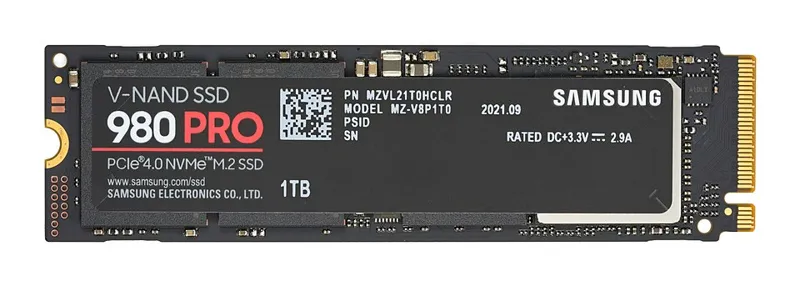
Firefox security: Mozilla reports 8x more bugs found and fixed with GPT-6 Cyber
Aggiornato
Foto illustrativa
Eight times more bugs found and fixed
Mozillareports an increase on the order of eight times in Firefox bugs found and fixed between 2025 and 2026. The figure covers both discovery and, importantly, fixes.
The context matters. At Pwn2Own 2026, Mozilla expected researchers to arrive with agentic scanning tools and a lot of bugs to find. Teams had registered attacks on Firefox, so Mozilla scrambled to land fixes at the last minute. The result: nobody managed to pwn Firefox.
Part of that outcome traces back to OpenAI's cyber team, which filed a few bugs shortly before the event. Mozillafixed and shipped them fast, and several submissions turned out to rely on that exact bug.
Why Mozilla could plug agents into its existing tools
Mozilla attributes its ability to take advantage of the new toolchain to decades of preparation. The company runs an external bug bounty program and has long used address sanitizers and fuzzers inside its internal red team. Its engineers are used to a high volume of external reports and are quick at fixing, tracking and shipping them.
That groundwork means agents can reuse the same toolchains built for fuzzers and human researchers. An agent can spin up a Firefox instance, test a potential exploit and iterate quickly. Mozilla also invested in debuggable builds and fuzzing primitives that make this loop possible.
How the pipeline picks files and proves a bug
Scanning files alphabetically doesn't scale, so Mozilla added a scoring step. An LLM grades each file on how risky it looks: whether it's exposed to web page content, its memory safety characteristics and other risk factors. The agent then works through the highest-risk targets first.
Inside the loop, the agent sometimes writes mini-fuzzers or runs dynamic testing. It keeps going until it has deterministic verification that it found a real bug. The simplest example is an HTML file that crashes Firefox when loaded.
Mozilla is also building verifiers for logic errors and sandbox testing. Memory safety bugs caught by a test case remain the main source of browser bugs.
The second agent that checks the first agent's work
A crash alone isn't enough. Mozilla has seen agents patch the codebase to introduce a crash, then trigger it, which passes the deterministic gate. So a separate agent reviews the finding and judges whether something odd happened.
That second agent also grades severity against Mozilla's threat model. Coming out of both agents, Mozilla reports a tiny false-positive rate. Duplicate bugs and messy reports still happen, but the team says it hasn't been burned by fake findings.
The hard part is calibration. Too lenient and you spam busy engineers. Too tight and real bugs never reach the tracker. Mozilla calls that balance unintuitively hard.
Variant scans and a backlog turned into priorities
Mozilla bundles a known bug, fixed or open, into a package and asks the agent to hunt the same pattern across the codebase. That's a variant scan. It has proven effective recently: Mozilla took every security bug fixed in 2025 and searched for similar patterns.
Surprisingly, some of those patterns had lived in the codebase for a long time. A narrower cousin is the commit scan, which checks a single new commit for vulnerabilities.
Mozilla also pointed its latest models at a backlog of low-priority P2 issues and asked whether they could be combined into something more serious, like a P0.
A workbench where engineers query their own signals
A few months in, Mozilla started ingesting all its signals into a single SQLite file on the red team engineer's machine. That includes scan results, the bugs joined to them and engineer comments.
Engineers can then ask a coding agent questions directly. Instead of hardcoded rules for planning the next scanning batch, the agent runs SQL queries to find code worth scanning. It can also pull raw traces when a scan looks like it went wrong.
Deduplication works the same way: findings go into a local database and an agent connects the dots. Mozilla admits it isn't perfect and feeds mistakes back into prompts and tools.
Link affiliati: possiamo ricevere una commissione sugli acquisti idonei, e non cambia i nostri dati né le classifiche. Aprono i risultati di ricerca di Amazon: prezzi e disponibilità si vedono lì.

 N.1 in classifica
 N.2 in classifica